









.avif)
“ As we build integrated multimodal quantum data centers and connect quantum processors directly with HPC infrastructures, transparent, low-level hardware control is essential to delivering scalable, hybrid quantum–classical computing environments. Qblox enables this level of hardware control through Q1ASM, giving us at Qilimanjaro the precision and flexibility needed to advance our analog and digital QPUs."


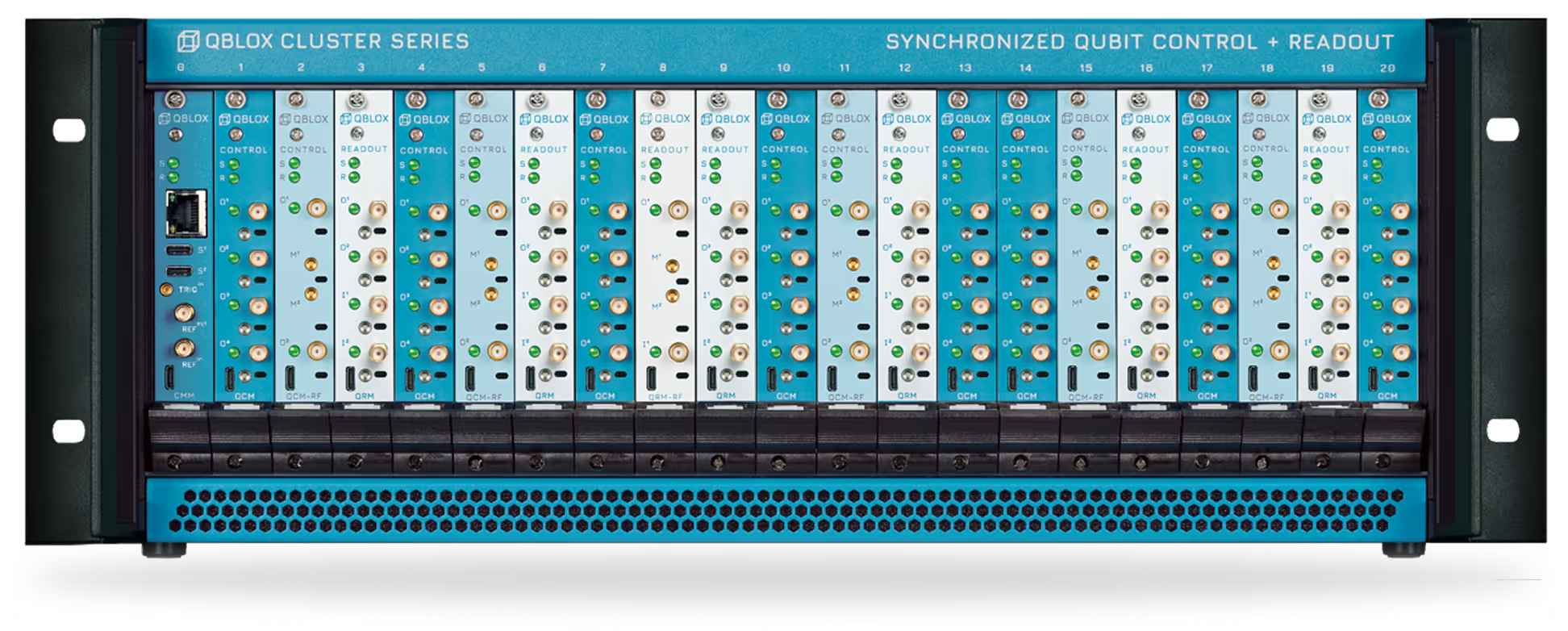
“ Since 2021, Qblox has been a vitalpartner in our mission to build a 100-qubitquantum computer for Swedish industry.Their robust, scalable control systemdelivers outstanding analog performance,allowing us to push quantum boundarieswithout hardware limitations. Withunparalleled channel synchronizationand fast real-time feedback, we can fullytune up our 20-qubit systems in under 30minutes."


“Since 2022, Qblox has been a trustworthy partner, providing the qubit-agnostic control electronics essential to our vision. Their Cluster’s SYNQ & LINQ protocols enabled the ultra-low latency required for our fast, parallel qubit characterization. We highly recommend Qblox for their professionalism and innovative approach to quantum computing challenges.'

“ The Qblox control stack has transformed our lab by replacing four separate pieces of equipment with a single, integrated 'blue box'. By combining RF/MW generation with coincidence detection and timetagging, our students achieve results faster. Combined with their excellent, fast-response support, Qblox is essential for our state-of-the-art research."


“ Qblox support team’s expertise and quick response to our queries exceeded my expectations, making the setup process a breeze. Their continuous support allows our PhDs and postdocs to excel in their measurements without worrying about the control electronics. I’m very impressed by Qblox’s commitment to supporting their products and their users."


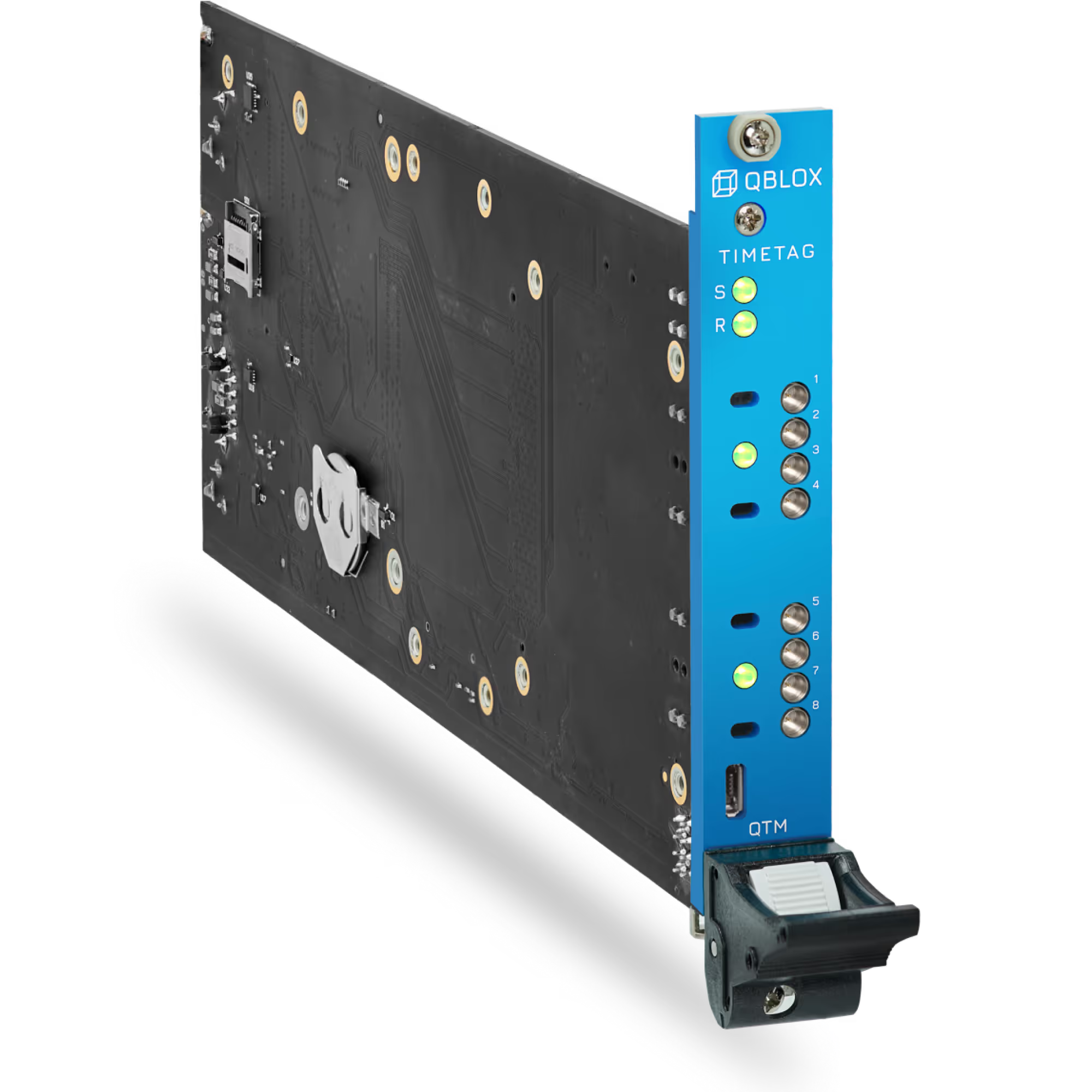
“The QTM delivers state-of-the-art performance for field-deployed quantum communication. It stands out through its immediate reconfiguration via a Python API and seamless integration with the Qblox Cluster. This allows for full orchestration of quantum memories and photon sources—all within a single, unified setup."


“ I've been impressed by the technical background and helpful attitude of the team we have supporting us. They are always fast to respond, really helpful and give thoughtful answers. It's fantastic."


“ Qblox support team's expertise and quick response to our queries exceeded my expectations, making the setup process a breeze. Their continuous support allows our PhDs and postdocs to excel in their measurements without worrying about the control electronics. I’m very impressed by Qblox’s commitment to supporting their products and their users."