Qblox Cluster
How Q1 sequence processors are linked.
Within a module. Between modules. Between clusters.


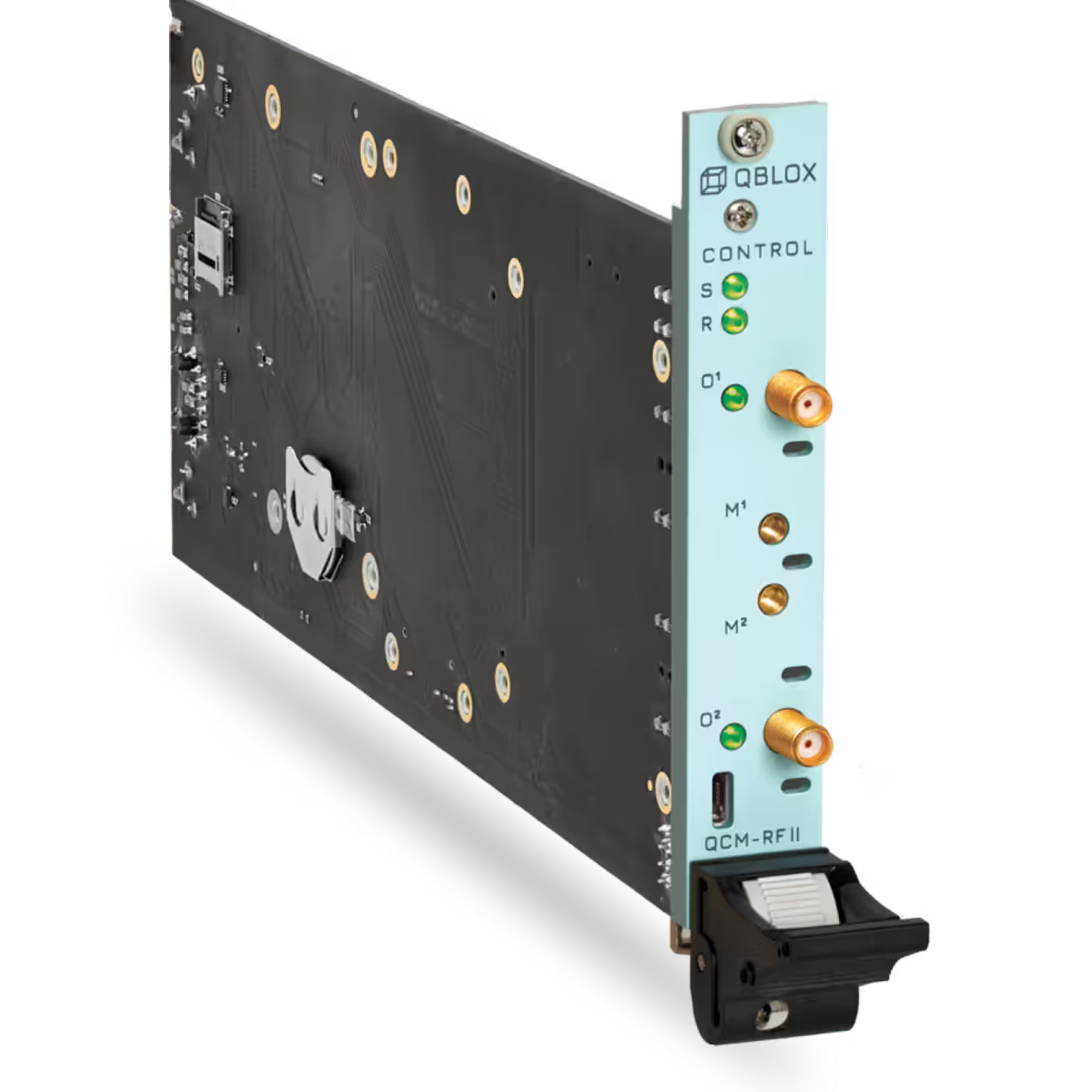
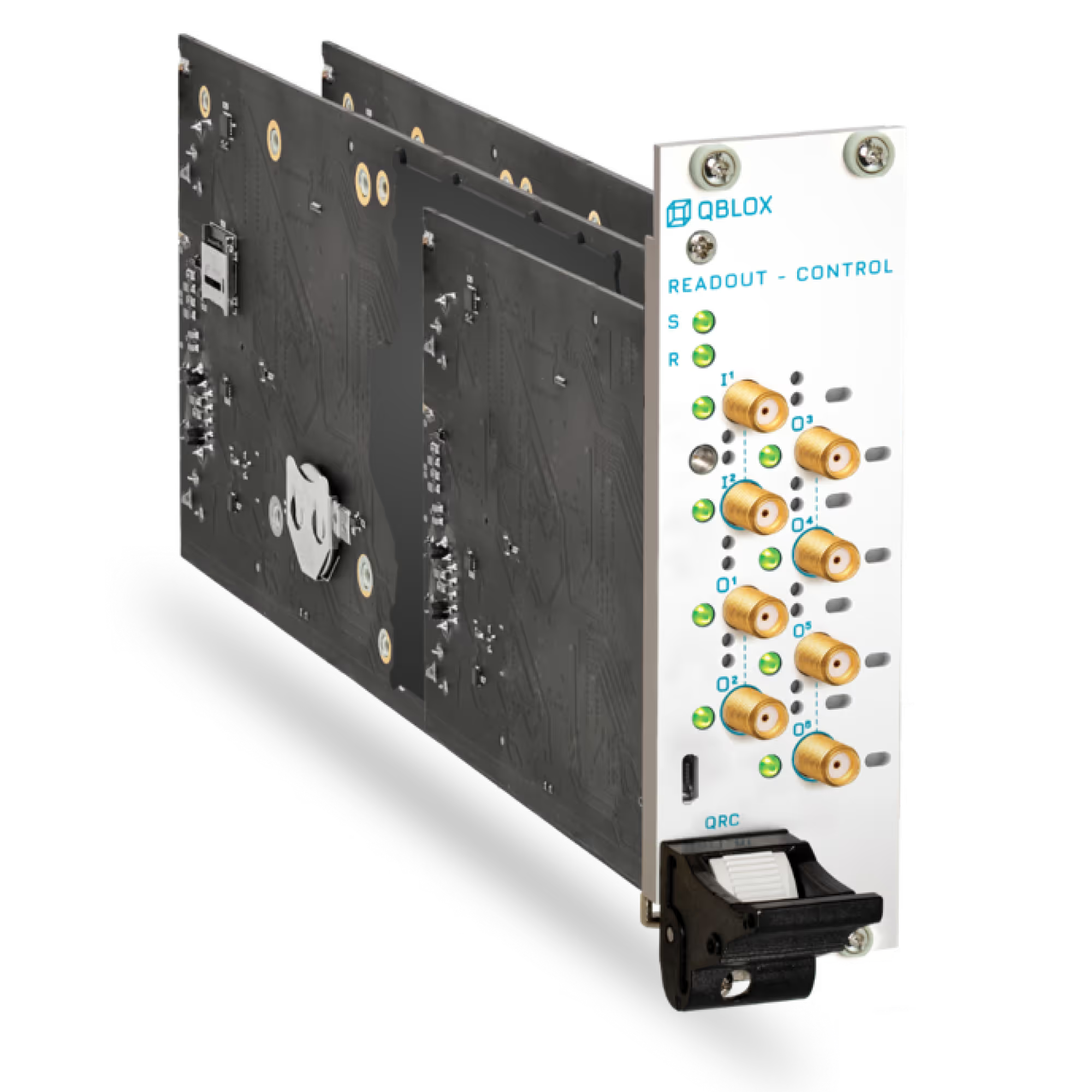
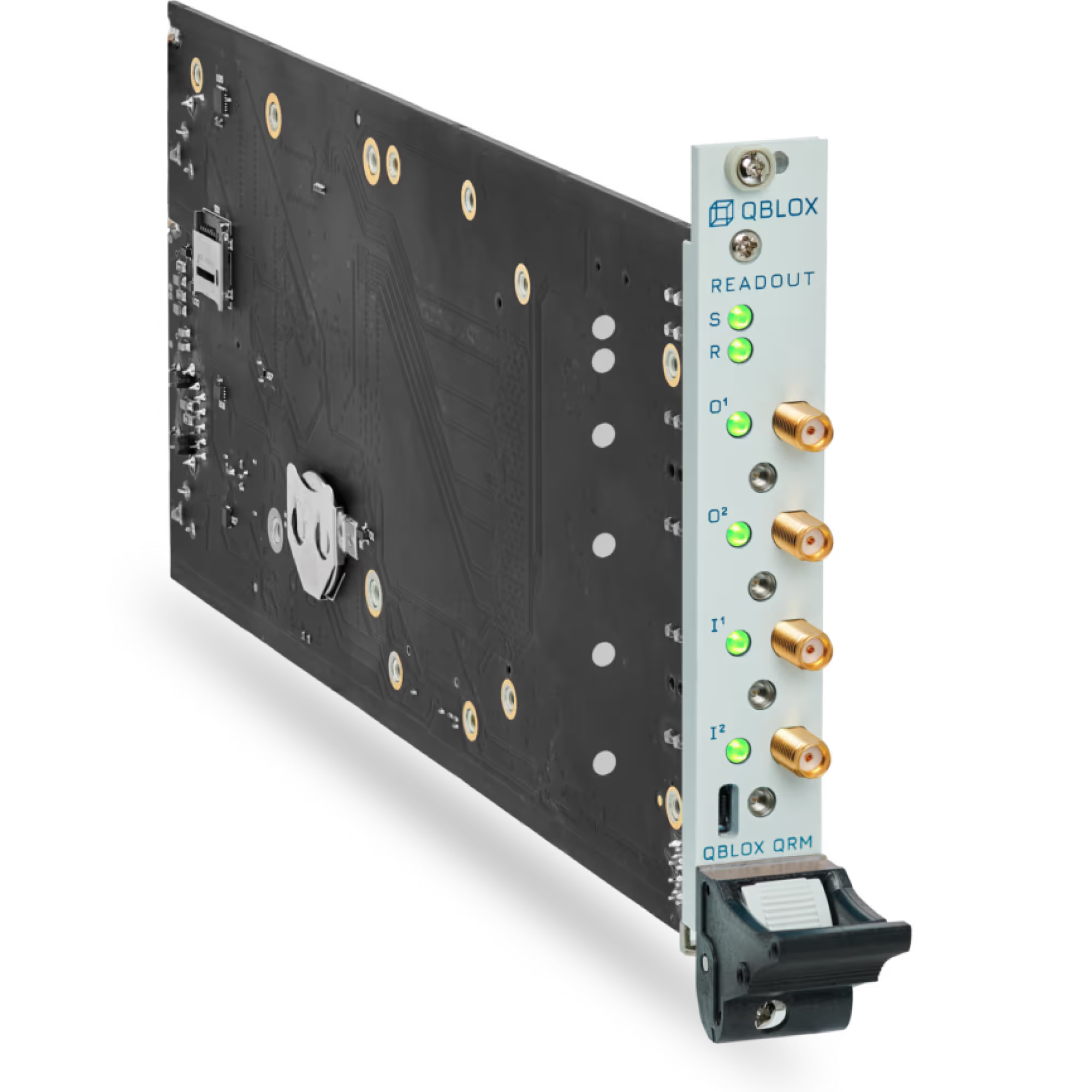
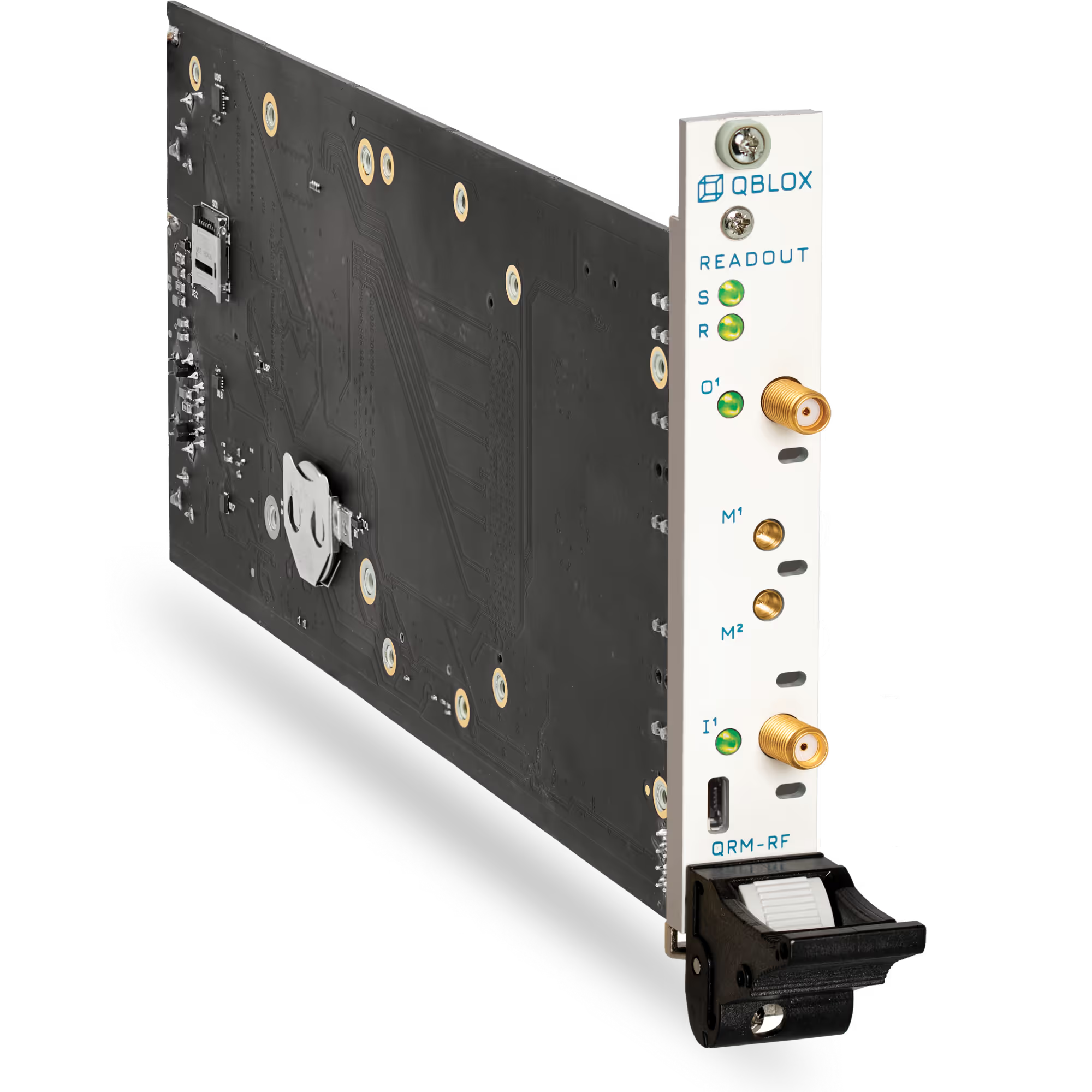


Q1 is the real-time sequence processor implemented in the FPGA of every Qblox module. Each Q1 sequencer runs independently, like a core in a CPU, generating, timing, and shaping pulses locally in hardware with no host computer in the loop.
Q1 places pulses on a 1 ns time grid and updates pulse parameters in 4 ns, deterministically, on every cycle.
Gapless playback means Q1 plays pulses with different parameters back to back, with no idle time in between. Q1 separates its classical core from its real-time core, so logic and calculations never interrupt the pulse stream. Circuits run more compactly, and qubits do not decohere while the controller computes.
A 1 ns grid is four times finer than the FPGA clock. Pulses start exactly where the schedule places them, rather than rounding to a coarser clock edge, which gives short pulses full scheduling freedom.
Deterministic. Every operation completes within a fixed hardware window, independent of system load. Software-timed control that relies on host computation completes within a statistical range instead.
Precalculated sequences are slow to upload and cannot adapt to qubit measurements while running. Q1 generates parameterized pulses on the fly, so control flow can change mid-sequence and uploads stay small.
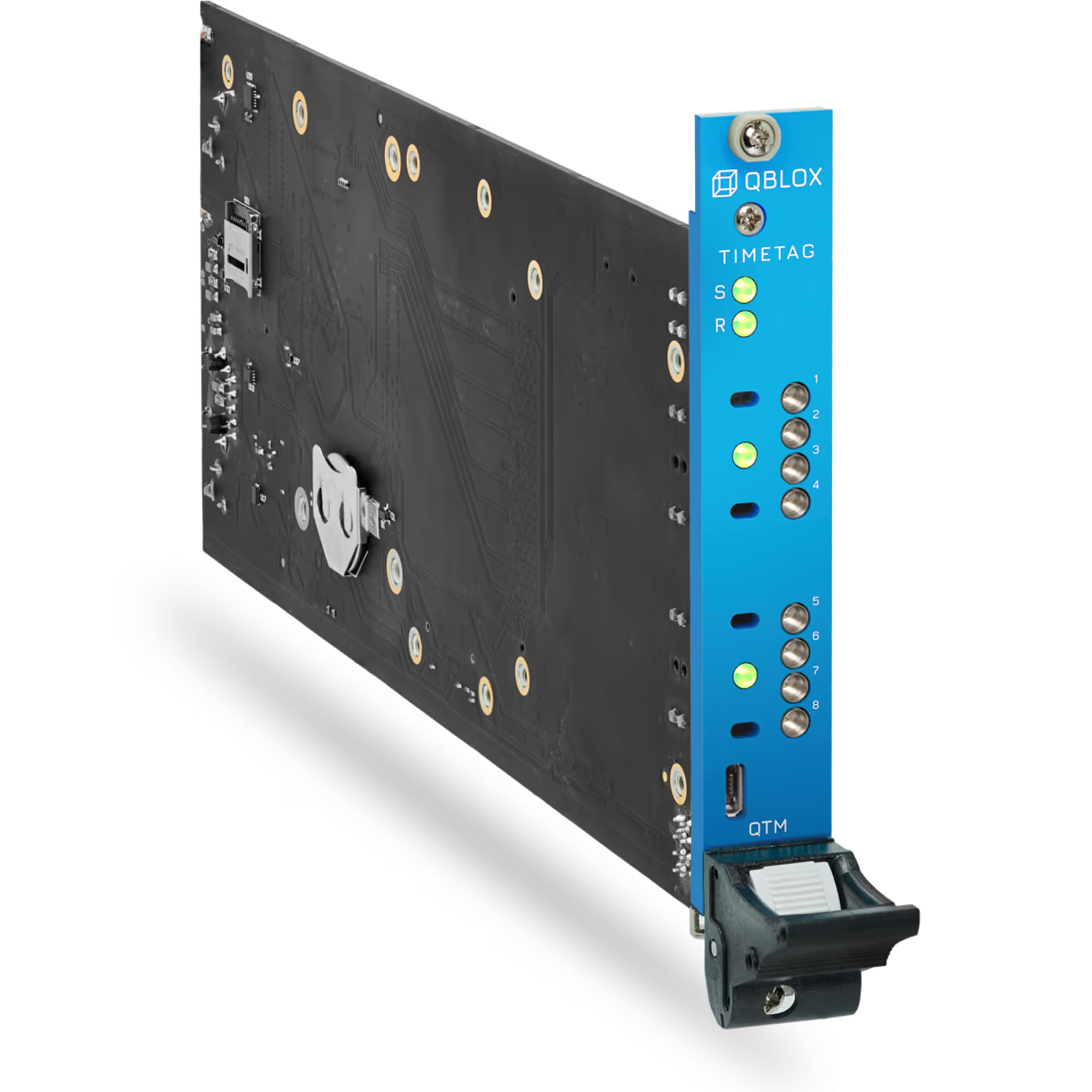
Q1-based timetag modules detect photon arrival times with dedicated time-tagging hardware rather than ADC sampling. They support cold-atom, trapped-ion, and quantum-network setups.
RTP is a Q1 feature that cancels cable, bias-tee, and chip-level distortion on the FPGA in real time. It applies an inverse high-pass filter plus 4x IIR and FIR stages before a pulse leaves the sequencer.
Yes. A golden-section search runs directly in Q1ASM, in parallel across every qubit's sequencer, recalibrating resonance frequency, qubit frequency, gate amplitude, and T1. Running calibration inside the control system, rather than through a host PC over Ethernet.
Both paths exist. Qblox Scheduler is a Python package that compiles quantum circuits into Q1ASM files, uploads them to the right sequencers, and analyzes the results. Qblox Instruments is the low-level API for settings, programs, waveforms, and data. Teams can also write Q1ASM directly or target the open instruction set from their own compiler.


